Steps Toward the Future
This page shares ongoing water system improvements, funding efforts, and future plans aimed at providing safe, reliable water for our community.
Following changes in City leadership in September 2022, the City of Friendsville undertook a comprehensive review of Utility operations with an emphasis on accountability, regulatory compliance, infrastructure condition, and long-term planning. This review included increased coordination with state agencies, MTAS financial advisors, and the Tennessee Comptroller to strengthen oversight, ensure transparency, and address known system deficiencies in a responsible and sustainable manner.
During this process, the City also recognized and acknowledged community concerns related to water main breaks and system leaks. When leaks occur, residents understandably question why they happen and how they are addressed. Utility crews respond promptly and professionally to reported leaks; however, many of these incidents are the result of long-standing infrastructure conditions that developed over several decades. Addressing these challenges requires both immediate action to restore service and long-term corrective efforts to improve overall system reliability.
As part of the operational review, Utility crews expanded leak detection efforts throughout the system, including physically walking water lines and locating undocumented or difficult-to-access infrastructure. These efforts frequently revealed aging materials, inconsistent installation practices, and system components that had previously been addressed with temporary repairs. The City has since shifted its approach to prioritize permanent repairs and system rehabilitation whenever feasible.
Modernization of the water system remains a primary focus. The City is replacing aging and brittle water lines with modern materials such as PVC and ductile iron, upsizing water mains where feasible to reduce pressure-related stress, and correcting past installation issues discovered during repair work. Many repairs involve more than a simple replacement. Leaks occur without warning and are often located beneath roadways, in wooded areas, or on private property. Crews frequently work outside normal business hours and in challenging weather conditions, navigating rock excavation, unmapped utilities, and right-of-way limitations to ensure repairs are completed safely and correctly.
Each repair contributes to the broader effort to strengthen the Utility system. While repairs may appear repetitive, they are part of a long-term strategy to build a safer, more reliable, and more dependable water system for the community.
Residents also play an important role in system reliability. Prompt reporting of leaks helps crews locate and address issues before they worsen. Standing water, sudden drops in water pressure, or other unusual conditions should be reported to Friendsville Utility at 865-995-0243, ext. 101. The City appreciates the public’s patience, cooperation, and support as these improvements continue.
Meter Reading History and System Changes
Prior to 2013, water meters were read manually. This process required a four-person crew and could take up to two weeks each month to complete.
In 2013, the City upgraded to Automated Meter Reading (AMR) technology. This improvement significantly reduced meter reading time to approximately one day and allowed for more efficient data collection and billing.
Meter Communication Challenges (2019–2022)
Beginning in 2019, meter antenna batteries began reaching the end of their expected service life. While the meters continued to measure water usage, many were no longer able to transmit that data to the billing system. Supply chain disruptions, combined with delays caused by the COVID-19 pandemic, further impacted the City’s ability to repair or replace failing components.
As a result, some customer accounts reflected zero or unusually low usage, even though normal water consumption continued.
Why Accurate Metering Matters
When meters cannot transmit data correctly, the Utility is unable to bill accurately or fully account for system demand. During this period, the City identified water loss averaging between 40% and 50%. This loss was caused by a combination of underground infrastructure leaks and inaccurate or missing meter data.
Reducing water loss is essential to maintaining financial stability, meeting regulatory requirements, and planning for future system needs. Accurate metering plays a critical role in understanding usage patterns, identifying leaks, and ensuring fairness for all customers.
Meter Replacement Project (2024)
To address these challenges, the City implemented a grant-funded meter replacement project in 2024. Over 461 meters were identified as not reading or transmitting data properly. Grant requirements mandated that installation be completed by a third-party contractor.
Customers received multiple mailed notices explaining the replacement process and timeline. Meter exchanges began in April 2024, and all new meters were installed prior to the October billing cycle.
The new meters provide improved accuracy, stronger system monitoring, and better accountability. These upgrades support reliable billing, reduce water loss, and help position the City for effective long-term infrastructure planning.
List of Accounts with zero usage
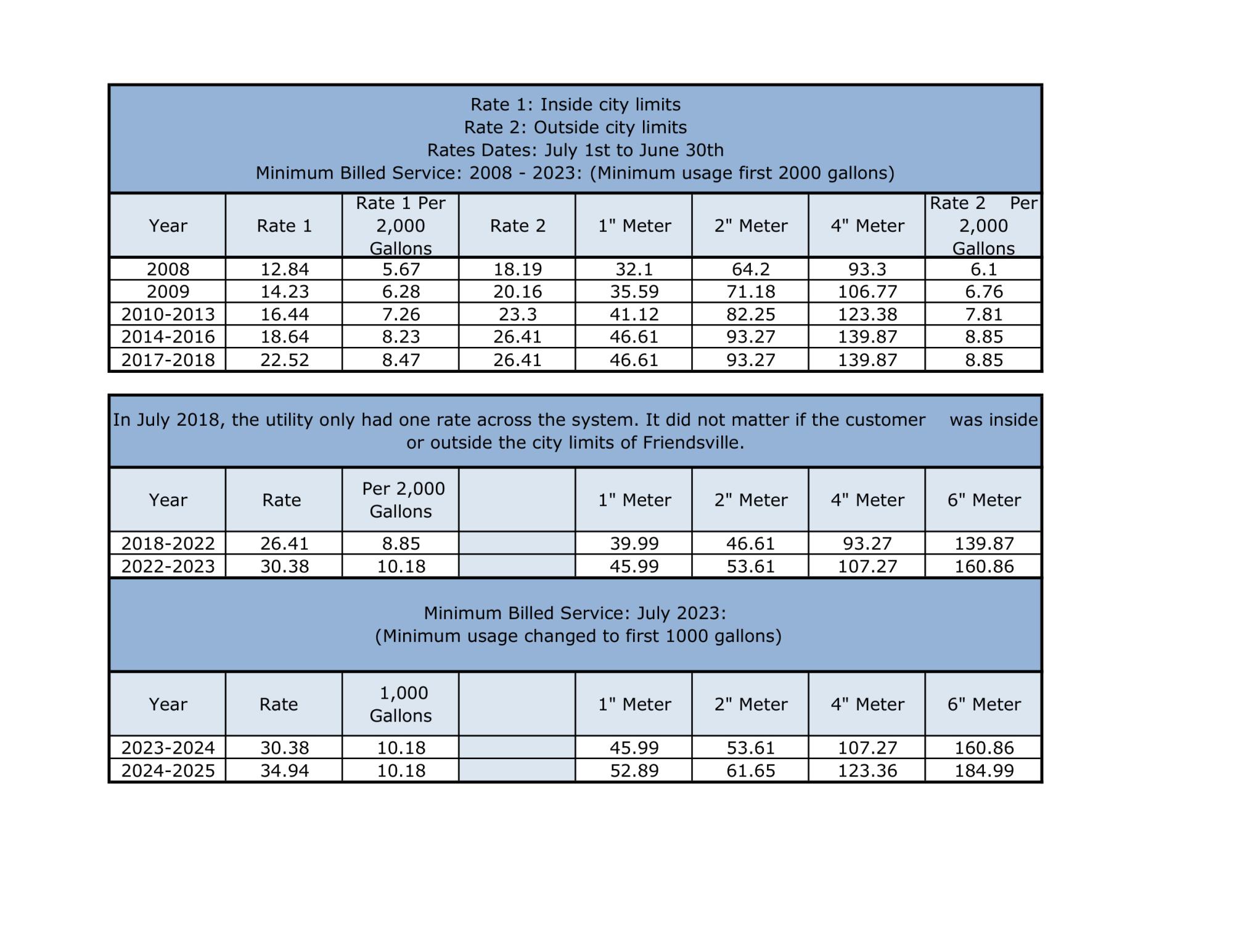
Utility Rates Time Table
The Utility serves customers both inside and outside city limits, with rates structured accordingly. Utility rates must support daily operations, system repairs, water supply costs, and infrastructure replacement needs.
In 2022, a Utility Rate Study was completed by MTAS. The Utility Board was advised that rate increases would be necessary over time due to:
- Water loss averaging 40%–50%
- Aging meters requiring replacement
- Rising supply and operating costs
- Ongoing infrastructure needs and compliance requirements
Recent Rate Timeline
- July 2022: Rate increased (2,000-gallon minimum remained in place)
- July 2023: Rate remained the same; minimum usage reduced to 1,000 gallons